

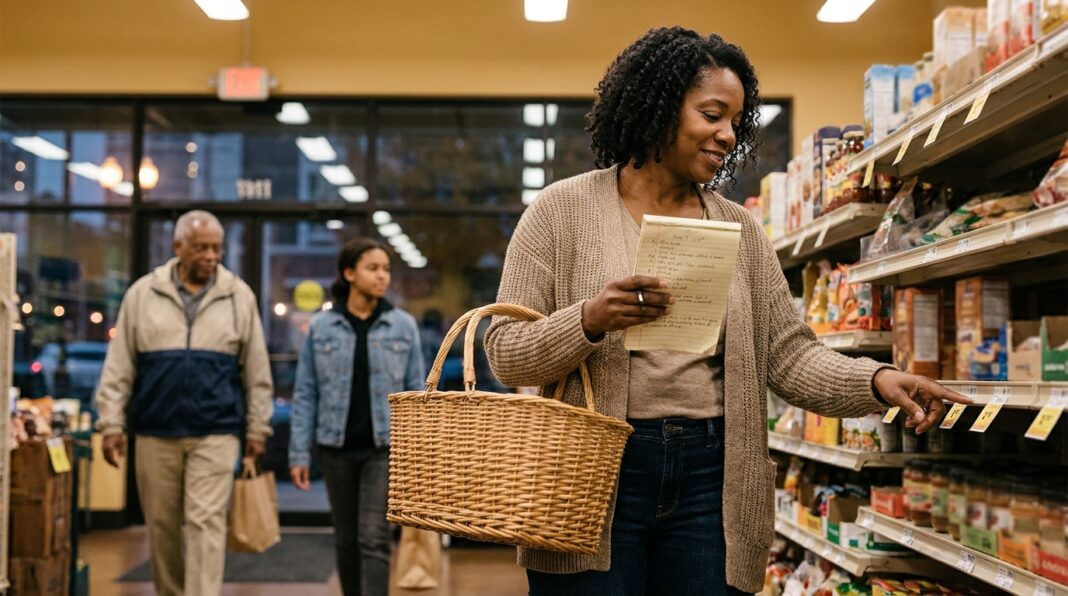

Grocery prices aren’t letting up. The Consumer Price Index hit 337.511 in October 2026 (Bureau of Labor Statistics), reflecting more than two years of elevated food costs that have quietly inflated every trip to the supermarket. With Christmas dinner five weeks away, on December 25, that pressure lands squarely on whoever is volunteering to host. Put that dinner on a credit card at today’s average rate of 21.19% (Federal Reserve, August 2026) and a $400 grocery bill could cost you considerably more by the time you’ve paid it off. The good news: a smart cheap Christmas dinner menu doesn’t mean a lesser table. It means planning before you shop.
Quick Answer
How do you build a cheap Christmas dinner menu without sacrificing the feast?
A budget-first Christmas dinner menu starts with choosing a centerpiece protein priced per pound, then building sides from pantry staples and seasonal produce. With the Consumer Price Index at 337.511 (Bureau of Labor Statistics, October 2026), planning and pricing each dish before you shop is the single most effective way to control costs. Read on for details on how to price your menu per guest and where the smart swaps are.
What Rising Food Costs Actually Mean for Your Holiday Grocery Bill
Agricultural investment in technologies like electric tractors and solar irrigation signals that food supply chains are modernizing, but those changes take years to reach grocery shelves (The Punch, 2026). Right now, in November 2026, holiday hosts are dealing with elevated prices on nearly every staple item. Diesel, which moves most of the food on those shelves, sits at $6.13 a gallon (U.S. Energy Information Administration, week of November 9, 2026). That cost travels through the supply chain and shows up at checkout.
Americans are carrying $1.37 trillion in revolving consumer debt (Federal Reserve, September 2026). The national unemployment rate stands at 4.1% (Bureau of Labor Statistics, October 2026), meaning many households are managing tight income against persistent price pressure. Holiday spending is exactly where unplanned costs accumulate. Building a priced menu before you set foot in a store is the only way to stay ahead of it.
How Do You Price a Christmas Dinner Menu Per Guest?
Start with a headcount and work backward. A table of eight is a useful planning unit. Your target for a full Christmas dinner, covering a protein, four sides, bread, and a dessert, is roughly $15 to $20 per person before beverages. That puts a table of eight between $120 and $160 total. Every item on your list should have a projected cost before it goes into your cart.
The protein is your largest line item. A bone-in ham typically runs $2 to $3 per pound at retail and feeds more guests per pound than turkey or prime rib. A 10-pound bone-in ham at $2.50 a pound costs $25 and easily feeds eight, putting your protein cost at about $3 per guest. That leaves roughly $12 to $17 per person for everything else. If you’re weighing options between a ham and a whole turkey, check the per-pound price, not the total price on the tag. Retailers often discount whole turkeys deeply in mid-to-late November. Buying a turkey in the last week of November for a December 25 dinner is one of the most reliable ways to cut your centerpiece cost.
Where Are the Real Savings on a Budget Christmas Menu?
Sides are where hosts overspend quietly. Each side dish should cost no more than $1.50 per guest to stay within budget. Four sides for eight people is a $48 ceiling. Here’s how that works in practice:
- Mashed potatoes: A five-pound bag of russets, butter, and milk costs under $8 and feeds eight generously. That’s $1 per guest.
- Green bean casserole: Two cans of green beans, one can of cream of mushroom soup, and store-brand fried onions runs about $6 for eight servings, or under $0.80 per guest.
- Roasted carrots: A two-pound bag of carrots, olive oil, and salt costs roughly $3. That’s $0.38 per guest and requires almost no prep time.
- Stuffing from a box or scratch: A box of stuffing mix costs about $3 and feeds six to eight. Making it from day-old bread, celery, onion, and broth costs slightly less and fills out the plate.
Bread is often skipped in budget planning but adds perceived value to a table. Dinner rolls baked at home from a $2 mix or bought as a store-brand twelve-pack for under $3 cost roughly $0.25 per guest. Don’t skip them.
Dessert is the final variable. A homemade pie beats a bakery pie on cost by a wide margin. A scratch pumpkin or pecan pie costs $5 to $8 in ingredients and serves eight. A bakery version of the same pie often runs $18 to $25. That’s a $10 to $17 difference on a single item.
What Swaps Keep the Feast Festive Without the Premium Price?
Store brands are the most underused tool in holiday grocery planning. On shelf-stable items like canned goods, broths, flour, and sugar, store-brand products are functionally identical to name brands and cost 20% to 40% less. Switching to store brands on your four sides alone can save $8 to $12 on a table of eight without anyone at your table noticing a difference.
Protein swaps matter too. Pork loin roast is often priced below $3 per pound and can be seasoned and presented in ways that rival more expensive centerpiece cuts. Chicken thighs, slow-roasted with herbs, cost a fraction of a standing rib roast. If your household is already carrying revolving credit card debt at today’s rates, readers in states like Texas can review options at resources covering debt consolidation vs debt settlement Texas, and those in Florida can find guidance on best debt relief programs Florida 2026, but the immediate priority is keeping new holiday charges off high-interest cards entirely.
Potluck distribution reduces your per-person cost without reducing the abundance. Ask two or three guests to bring a side or a dessert. You cover the protein and one signature side. A hosted potluck Christmas still feels generous to everyone at the table, and your grocery bill drops by a third.
Steps to Take Before Christmas Dinner Gets Expensive
- Write your complete menu and assign a dollar amount to every item before you shop. Total it. If it exceeds your per-guest target, identify which items to swap or simplify. This takes 20 minutes and is the only step that actually controls the final number.
- Shop the sales between now and Black Friday, November 27. Retail grocery promotions peak in the week before Thanksgiving and again in the week of December 20. Shelf-stable items, canned goods, butter, sugar, and spices bought on sale in late November will still be in your pantry on December 25. Diesel at $6.13 a gallon (U.S. Energy Information Administration) means delivery and transport costs are baked into retail prices; buying early when promotions run gives you the only real discount available.
- Keep holiday grocery charges off high-interest credit cards. At 21.19% APR (Federal Reserve, August 2026), a $300 grocery balance carried for six months costs roughly $30 in interest, money that buys nothing at your table. Pay for holiday groceries with cash or a debit card. If you’re already carrying revolving debt and want to understand your options, the CFPB’s consumer resources at ConsumerFinance.gov and the FTC’s guidance at FTC.gov are free starting points. Houston-area residents managing existing debt can also find city-specific context at debt consolidation Houston TX.
Map your holiday food budget before you shop. A written menu with a price on every line is the difference between a December credit card bill that surprises you and one that doesn’t. The table can be full, the food can be good, and the cost can be predictable. That’s the actual goal.
Frequently Asked Questions
What is a cheap Christmas dinner menu?
A cheap Christmas dinner menu is a planned meal built around low-cost proteins like ham or pork loin, budget sides such as mashed potatoes and roasted vegetables, and homemade dessert. With the Consumer Price Index at 337.511 (Bureau of Labor Statistics, October 2026), targeting $15 to $20 per guest keeps a full feast affordable without sacrificing variety or presentation.
How do you calculate the cost of Christmas dinner per person?
Price every item on your menu before you shop, then divide the total by your headcount. Assign each category a ceiling: protein at roughly $3 per guest, four sides at $1.50 per guest each, bread at $0.25, and dessert under $1. Total those figures to reach your per-person cost before beverages or extras.
Which protein is cheapest for a Christmas dinner centerpiece?
Bone-in ham is typically the most affordable centerpiece, often priced at $2 to $3 per pound at retail and yielding generous servings per pound. Whole turkeys bought on sale in late November offer similar value. Pork loin roast is another low-cost alternative that presents well and responds to simple seasoning.
Can you host Christmas dinner on a tight budget without it feeling sparse?
Yes. Abundance at a holiday table comes from variety, not cost. Four well-made sides, a full centerpiece, fresh bread, and a homemade pie create a generous spread. Store-brand pantry items, a potluck arrangement with guests, and buying sale items before Black Friday (November 27) are the most effective tools for keeping costs down.
Why is it important to avoid putting Christmas dinner on a credit card?
The average credit card APR is 21.19% (Federal Reserve, August 2026), and total U.S. revolving consumer debt stands at $1.37 trillion (Federal Reserve, September 2026). A $300 holiday grocery balance carried for six months at that rate costs roughly $30 in interest alone. Paying with cash or a debit card eliminates that cost entirely.
This article was reviewed for accuracy and produced with data from the following authoritative government sources:
- Federal Reserve Economic Data (FRED) — Interest rate and consumer debt data. fred.stlouisfed.org
- U.S. Census Bureau — Median household income data. census.gov
- Bureau of Labor Statistics (BLS) — Employment and CPI data. bls.gov
This content is for informational purposes only and does not constitute financial advice. Consult a qualified financial advisor before making debt-related decisions.